A queen, a relic, and a pillar in the British Museum
In the first decade of the first century, a woman endowed a stupa on the bank of the Yamuna and had her name cut into the stone that recorded it. The stone survives. Her name is still legible, and still argued over.
These are the centuries when Central Asian, Iranian, Greek and Indian forms sat alongside one another in the same cities. Dress was tailored and draped at once; a Buddha could be carved with a Corinthian capital above him; a satrap struck coins with Greek on one face and Kharoshthi on the other. Nothing about the period is culturally tidy, which is why it is worth looking at.
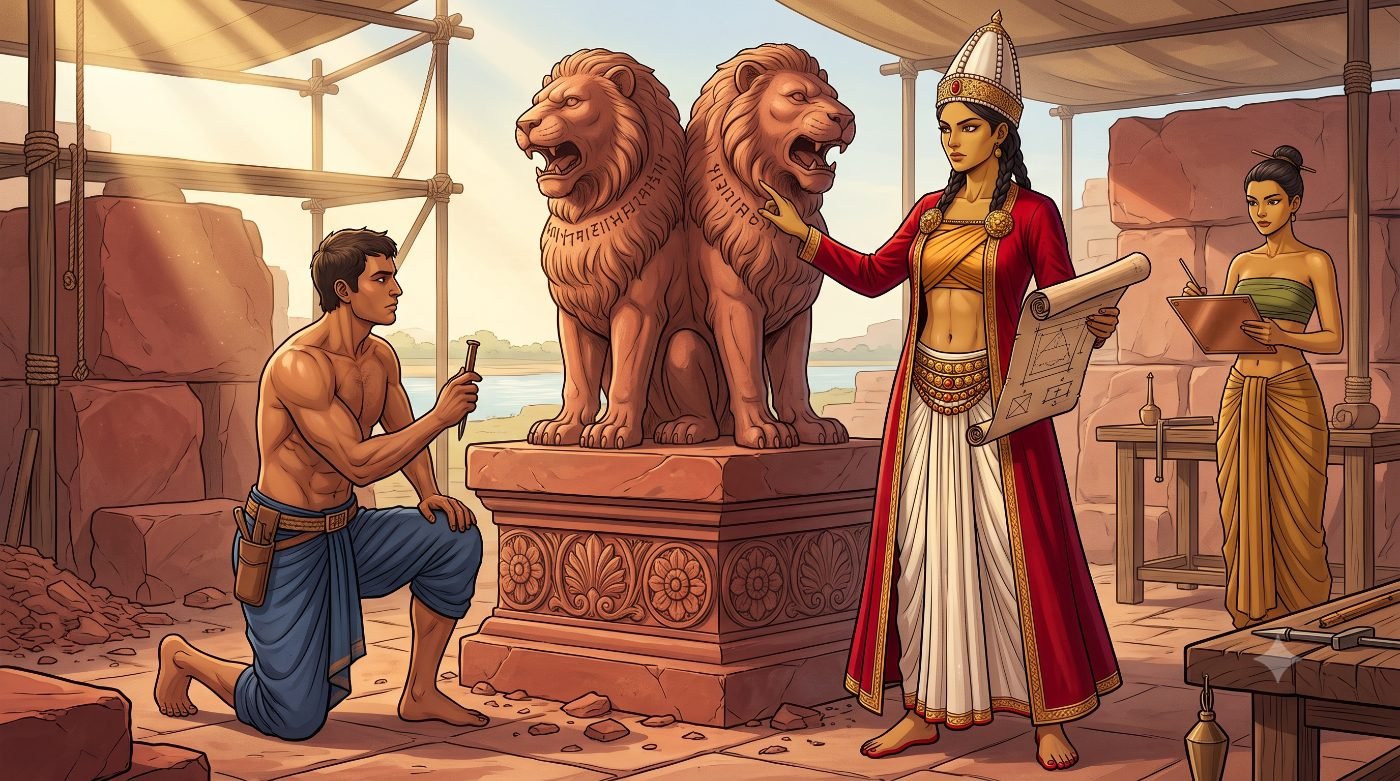
What the stone says
The Mathura lion capital is red sandstone, about 34 cm high, dated to the first decade of the first century CE and consecrated under Rajuvula, one of the Northern Satraps. It is covered in Prakrit inscriptions in the Kharoshthi script. It was found in the Saptarishi mound at Mathura and is now in the British Museum.
Among the donations it records is the gift of a stupa holding a relic of the Buddha, made by the chief queen of Rajuvula. She established the relic of Sakyamuni, together with a stupa and a sangharama, on the right bank of the Yamuna, for the Sarvastivadin order of the four quarters.
That is an endowment made in a woman's own name, to a named monastic order, on identified ground, cut in stone during her lifetime. It is not a story about a queen. It is her paperwork.
Editors read it differently. One reading gives Ayasia, chief queen of Rajuvula and daughter of Kharahostes. Another gives Nadasi Kasa, wife of Rajuvula and daughter of Aiyasi Kamuia. Thomas read the name as Nadadi Akasa, Bühler as Nadasia Kasaye, Konow as Nada Diaka. Whether the capital names one royal woman or two is genuinely open.
Four kinds of life, in one set of centuries
The point of showing these together is range, not a thesis. A donor, a rider, a performer and a court official are four different positions, and the period holds all of them.
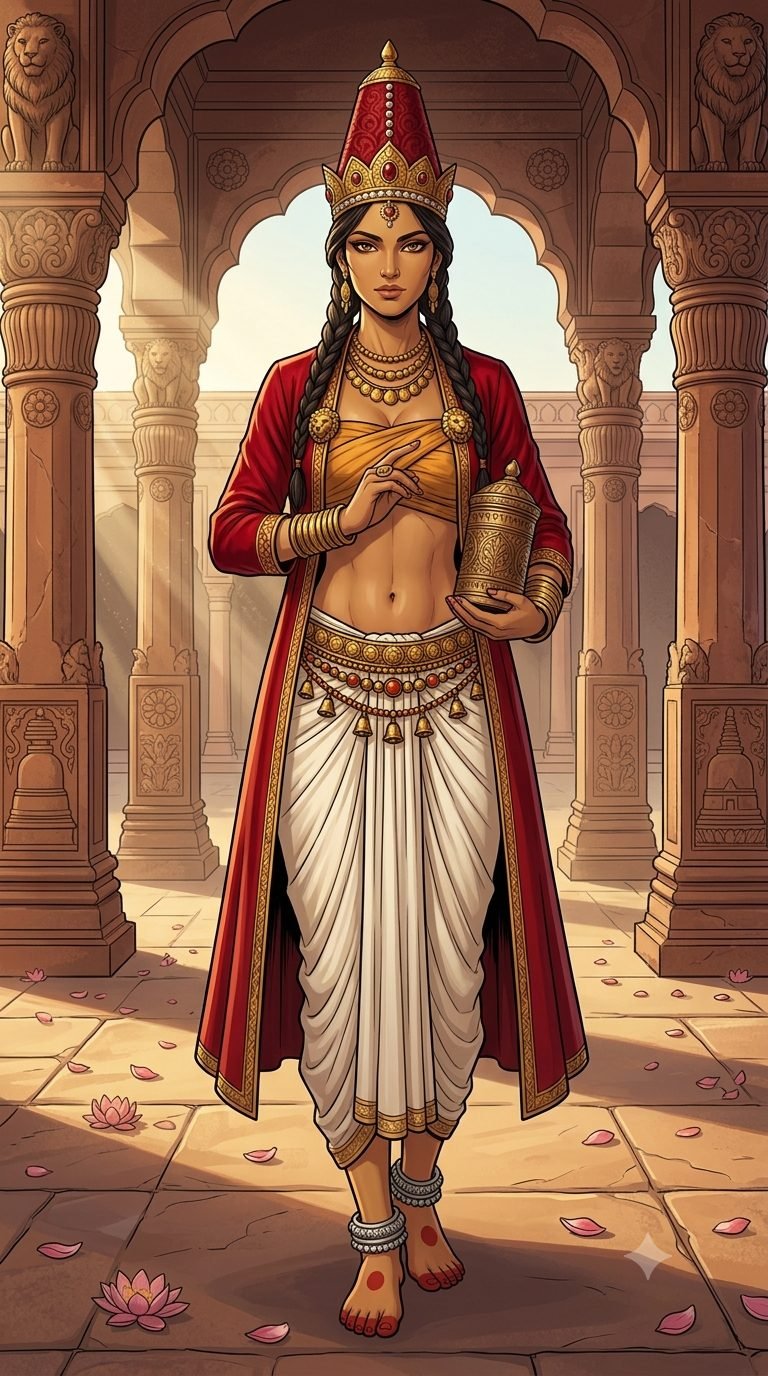

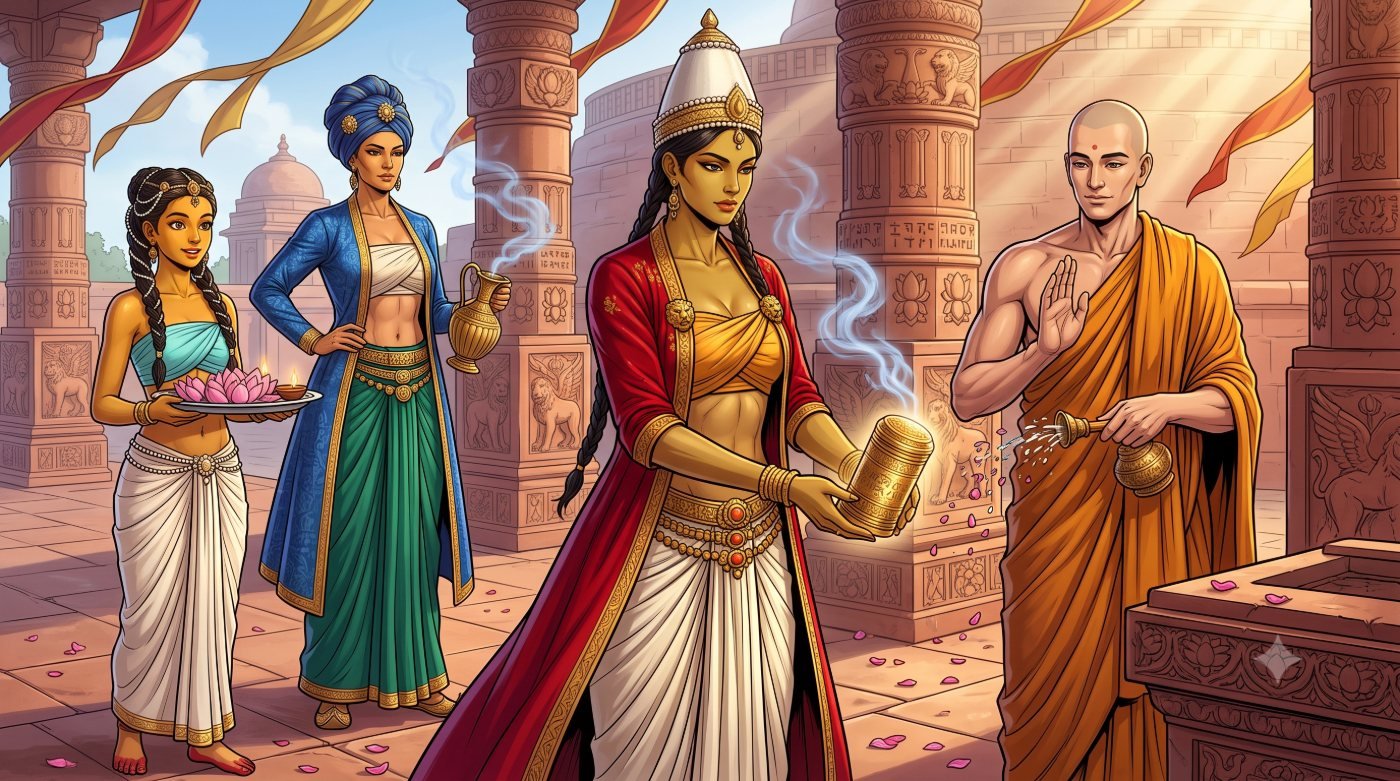
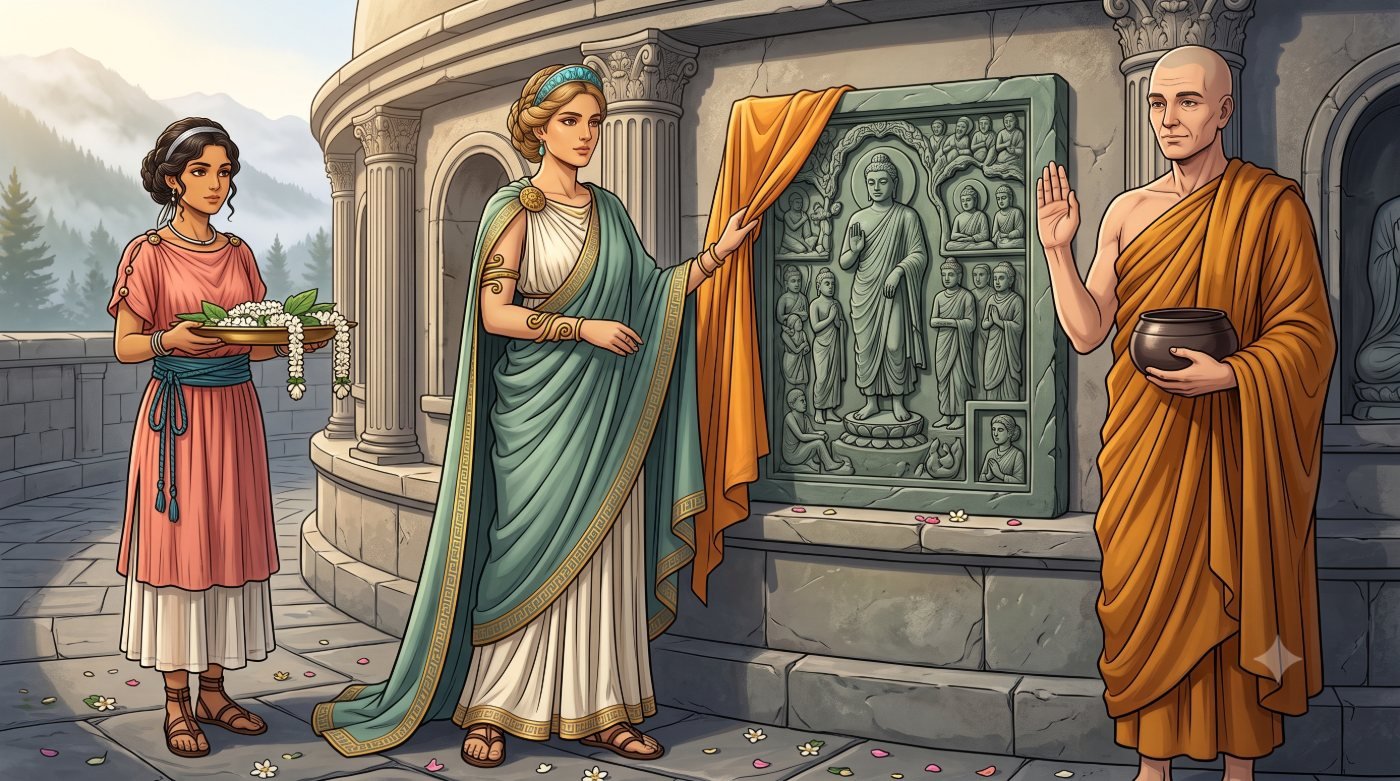
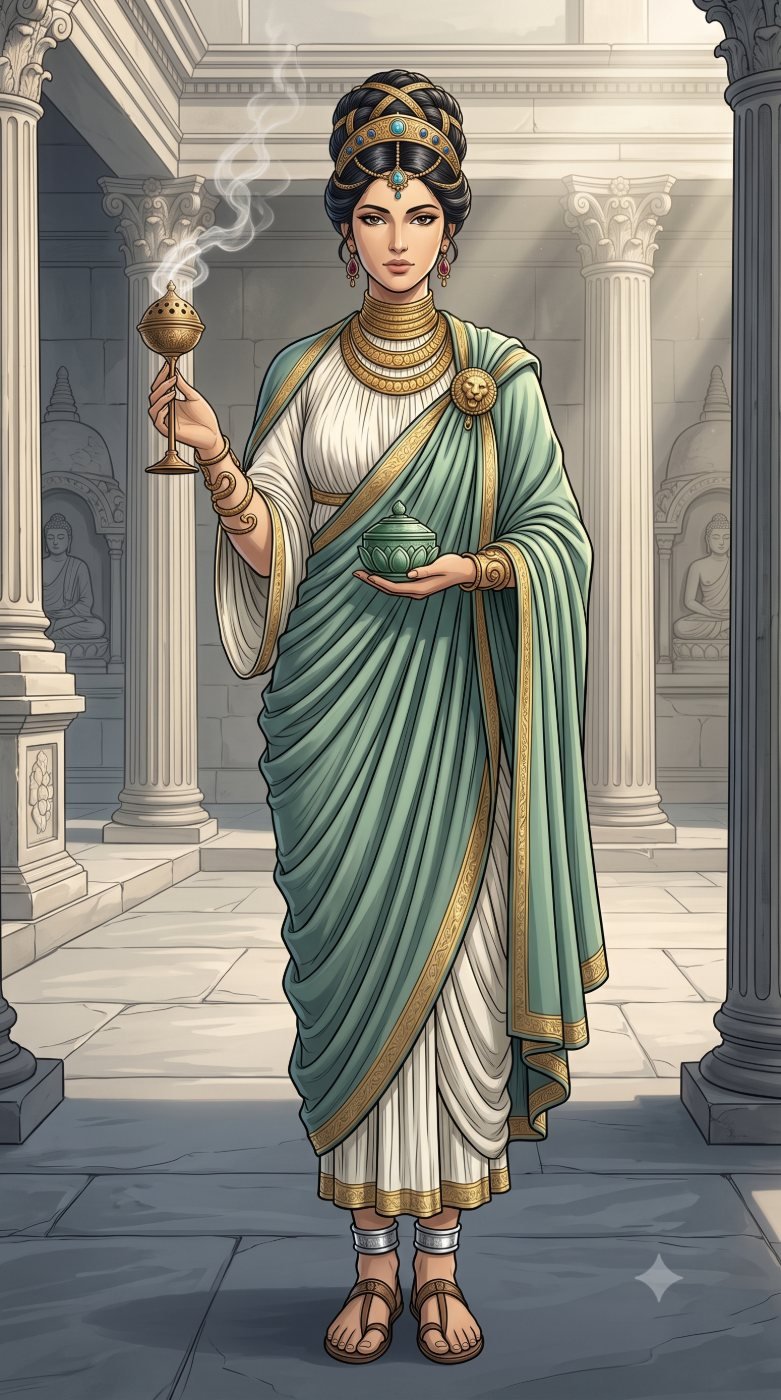
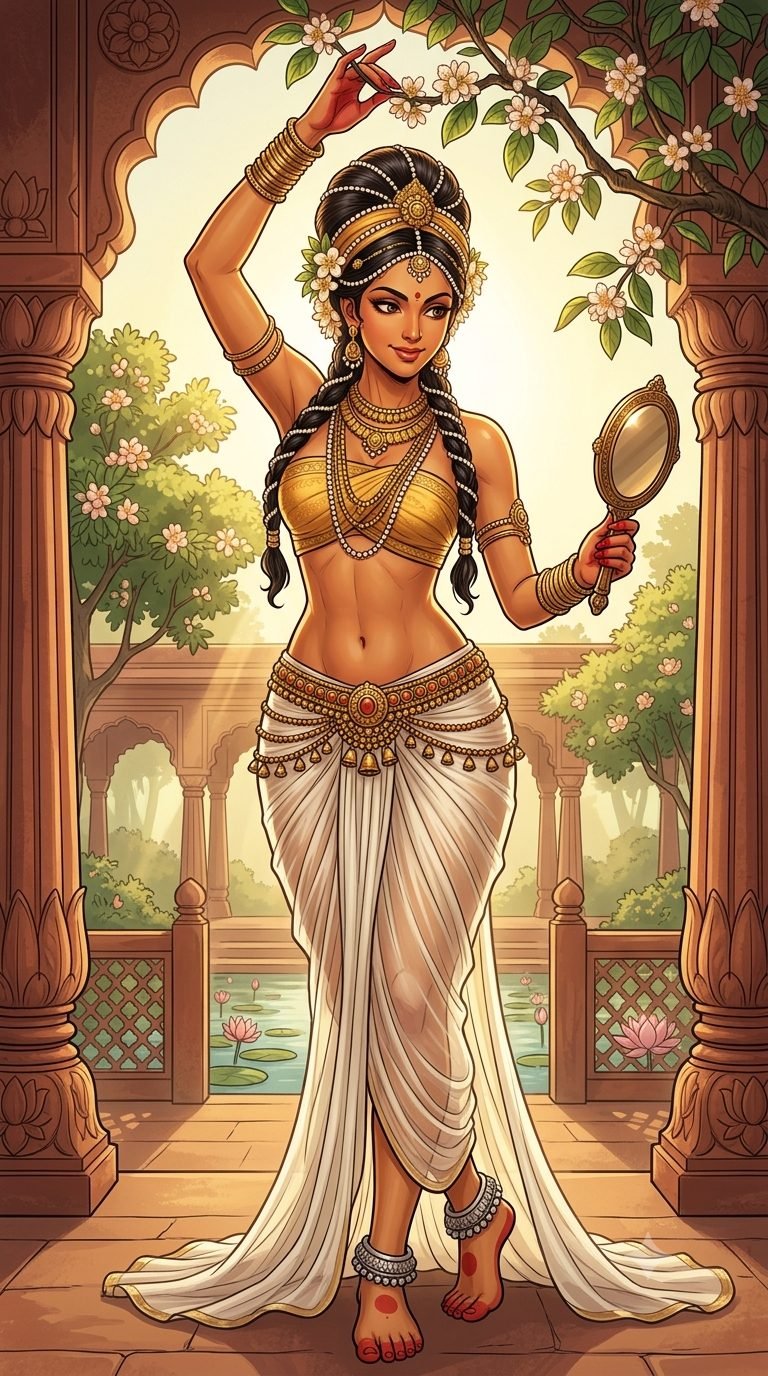
How to read the pictures
These are drawings, not evidence. They are here because a period this mixed is hard to picture from a description, and a wrong picture in the reader's head is worse than a drawn one with its seams showing.
So every caption is split three ways. Attested means the object, garment or practice is documented — in an excavated find, a relief, or a text. Inferred means we filled it in: faces, colours, weather, the particular arrangement of a room. Depicted for legibility means we knowingly drew something in a clearer or later form than the evidence supports, and say so rather than let a reader catch it.
No figure here is a portrait. Where a named woman appears in an inscription, the inscription is the claim and the drawing is only a way of holding her in mind while you read it.
One queen's endowment says nothing about most women's lives, and royal women are the least representative people in any period. Donative inscriptions also survive selectively: they record those with the means to cut stone.
What it does establish is that a woman could hold property, dispose of it on her own initiative, choose a sectarian beneficiary, and have the transaction recorded under her own name and lineage. Whether that was exceptional or ordinary is a question the epigraphy of the period can answer, and we will take it up rather than assume it.
Sources
The object is public and catalogued; the readings are where the disagreement lives.