Bodyguards, regulated courtesans, and a stupa's first donors
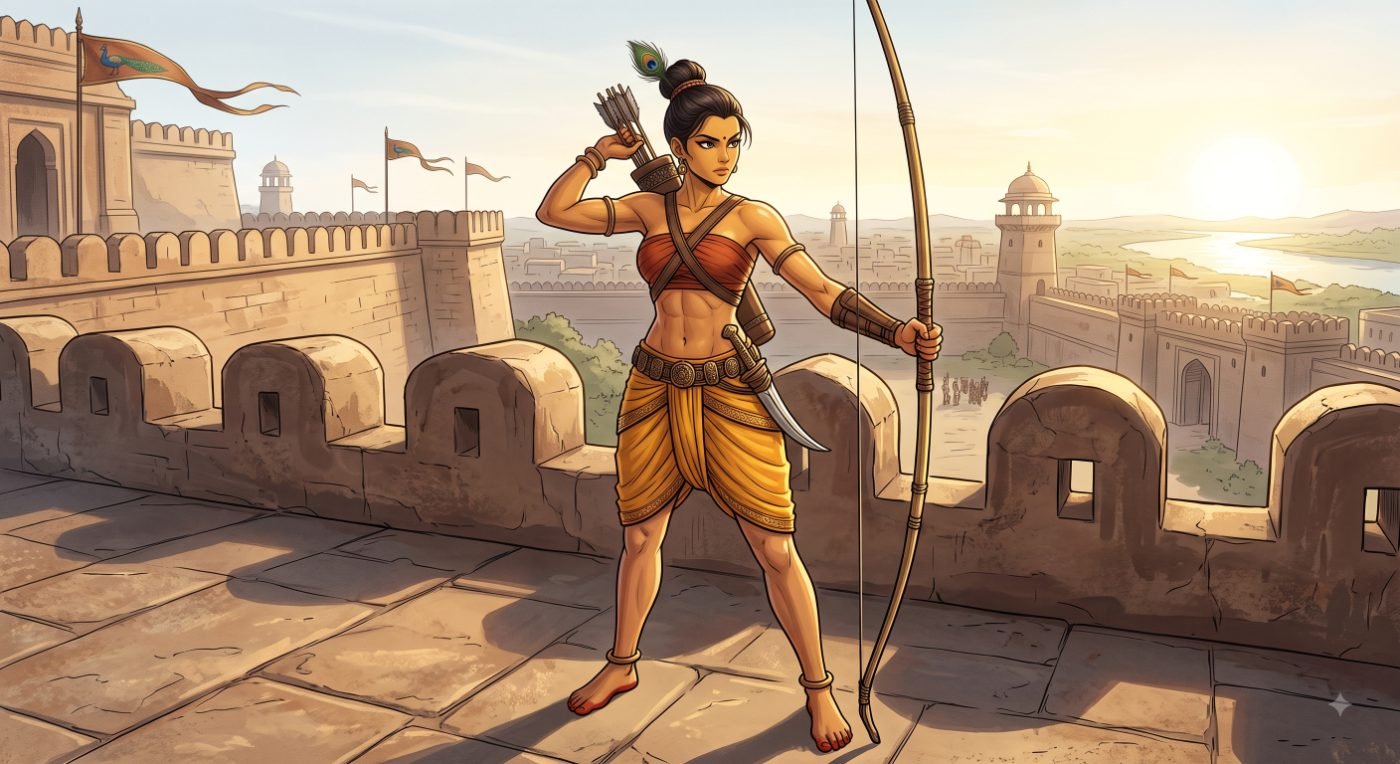
Kautilya's Arthashastra, the Mauryan-era treatise on statecraft, describes an armed female bodyguard at the royal court and a regulated class of courtesans, the ganikas, salaried and taxed by the state. The Greek ambassador Megasthenes, whose account survives through later writers, described the same female guard from the outside.
These are three positions inside one court and one empire: the women who guarded the king, the women whose profession the state itself organised and trained, and the women who paid, individually, for the empire's monuments.
The guard around the throne
Megasthenes, at the Mauryan court as the Seleucid ambassador around 300 BCE, described Chandragupta Maurya as guarded by armed women. His original account is lost, but is quoted by later Greek and Roman writers, principally Strabo. The Arthashastra corroborates an armed female bodyguard as a feature of the royal household from the Indian side.
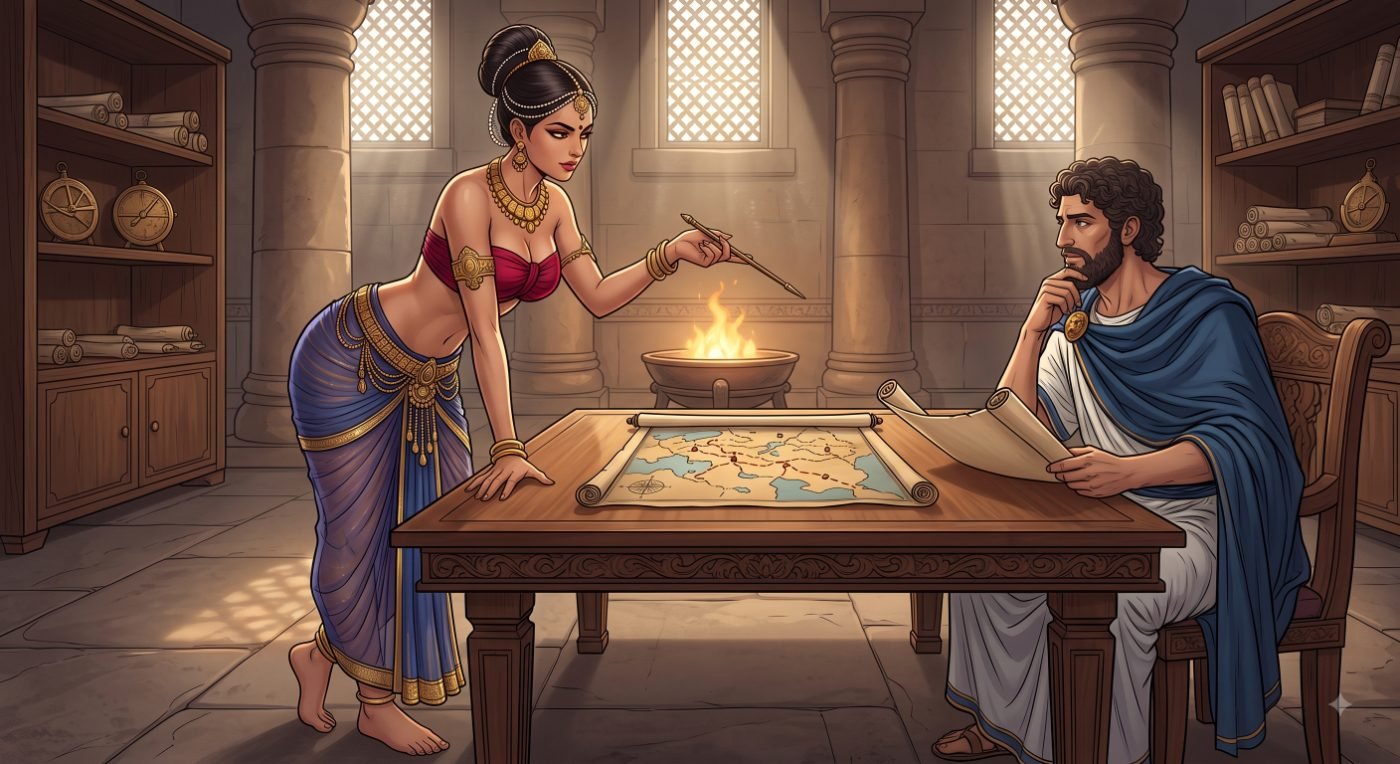
The court that produced this arrangement was not culturally sealed. Mauryan India maintained diplomatic contact with the Hellenistic kingdoms following Alexander's campaigns, and Megasthenes' own embassy is one product of that contact.

A profession the state ran
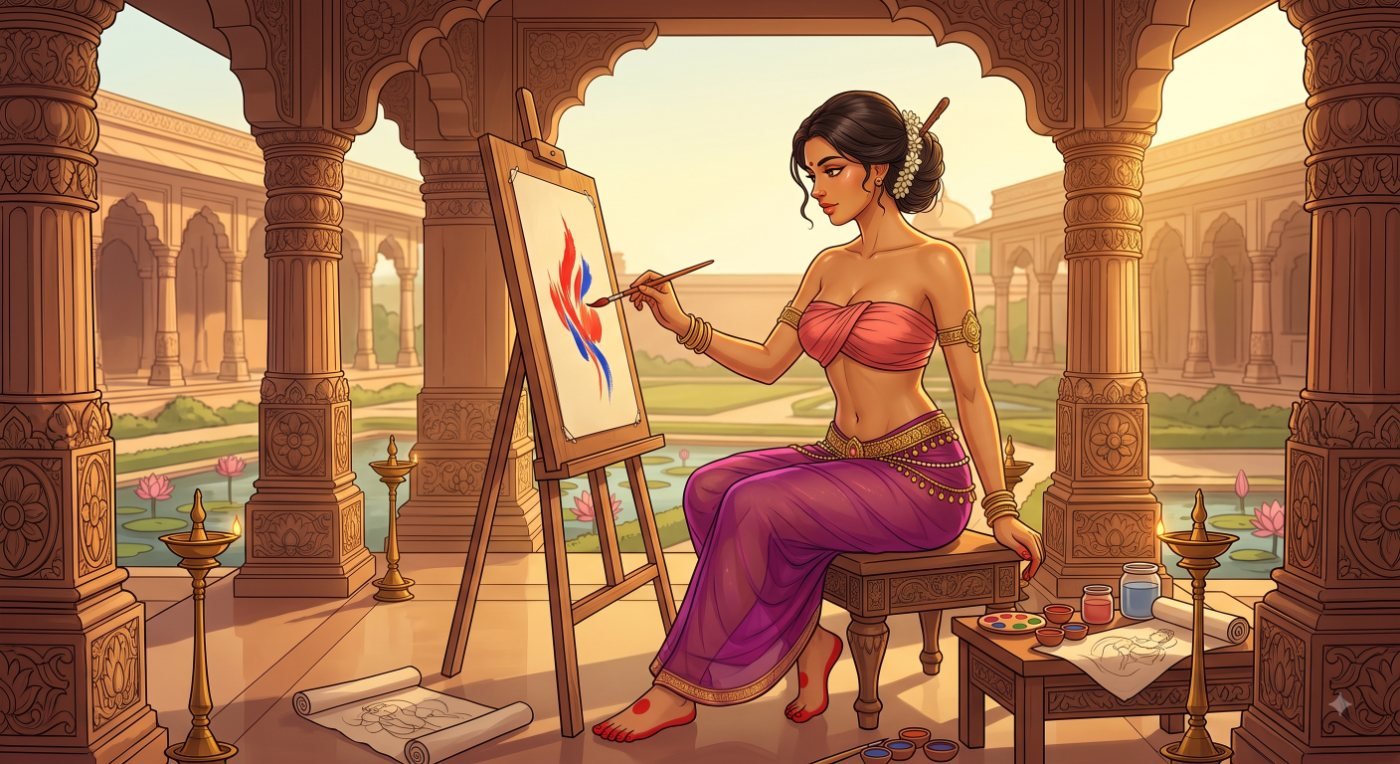
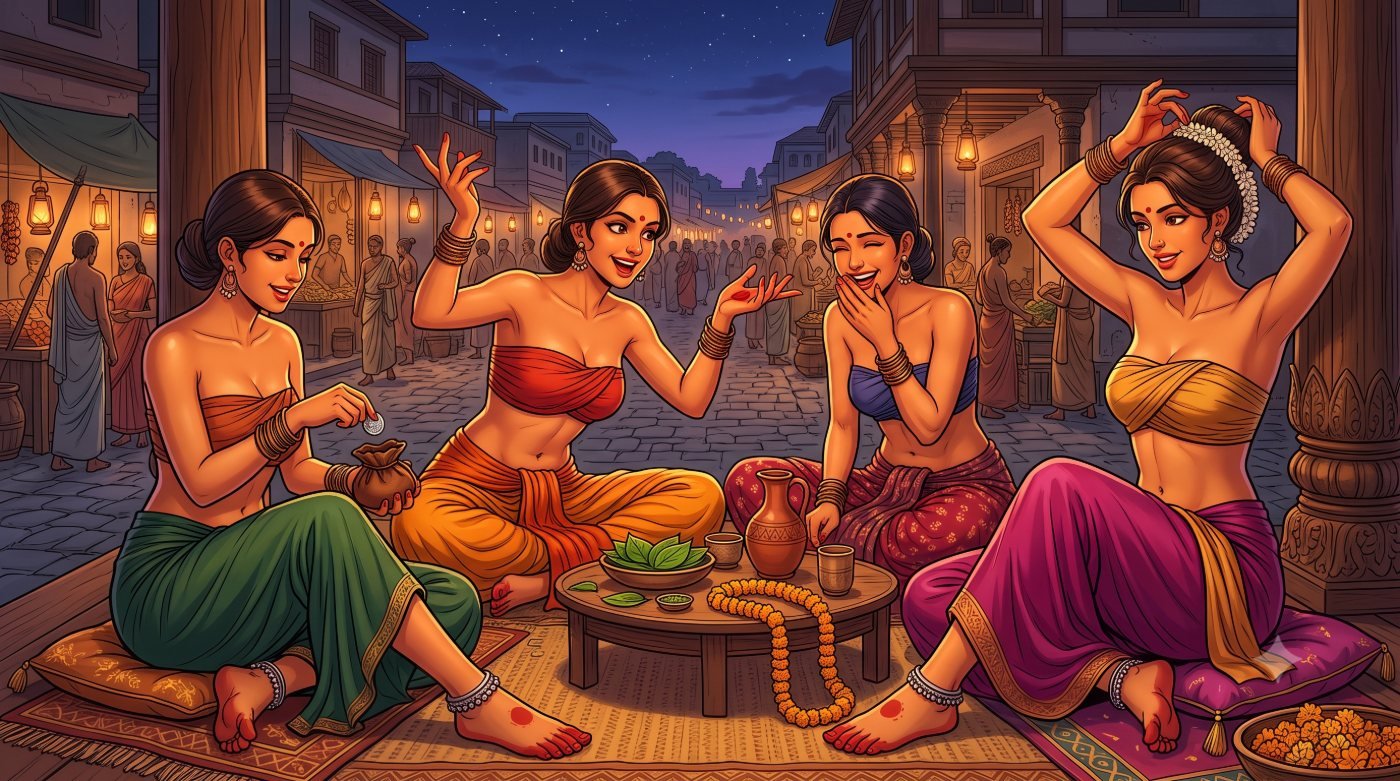
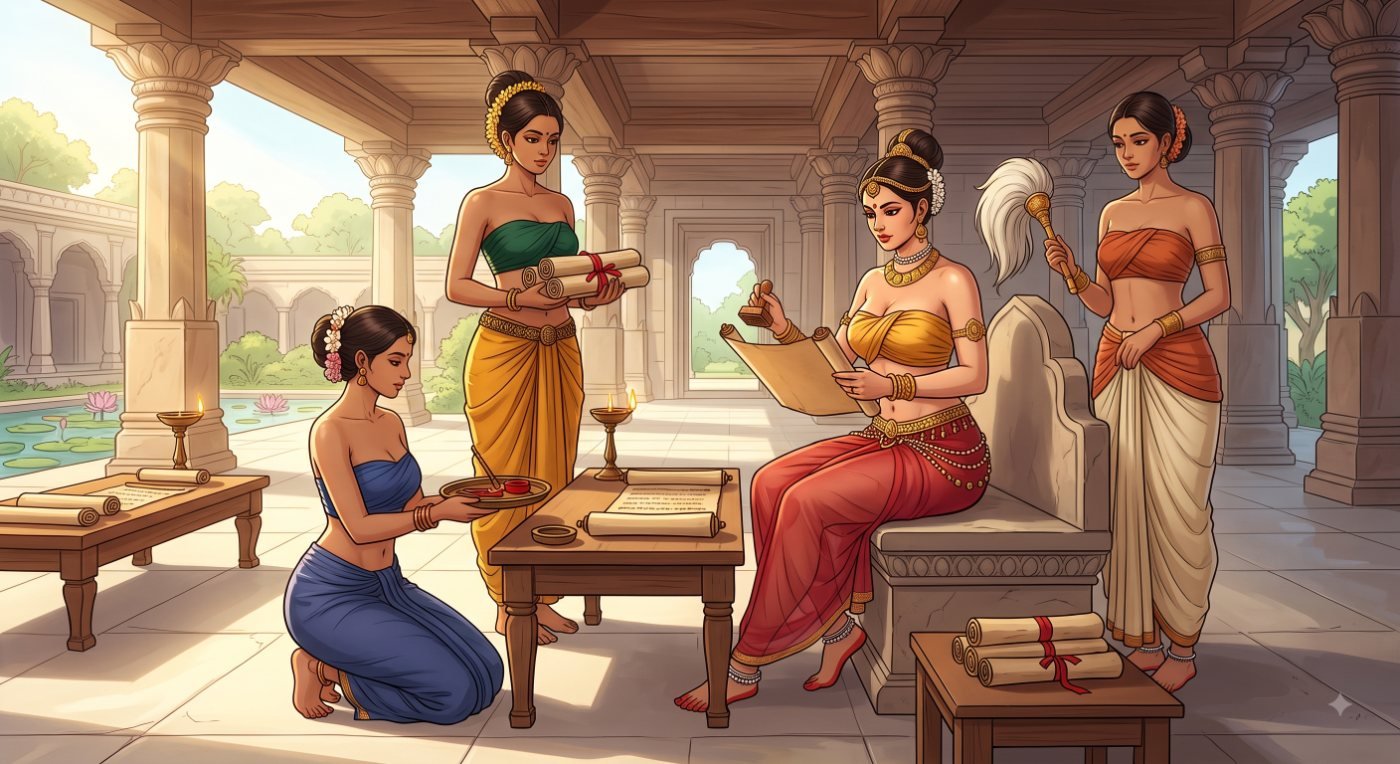
The Arthashastra treats the ganika as a state-regulated occupation: salaried, taxed, and put to use in roles that went beyond entertainment, including the gathering of information at court. Their training is described elsewhere in terms of the traditional 64 arts — music, dance, painting, and other accomplishments — a canon most fully catalogued in the later Kamasutra, but rooted in this same social role.
The women in this section are not depicted as a single individual: they represent a class Kautilya writes about at length, in a normal, administrative register, alongside tax schedules and irrigation.



The queen, and the first donors
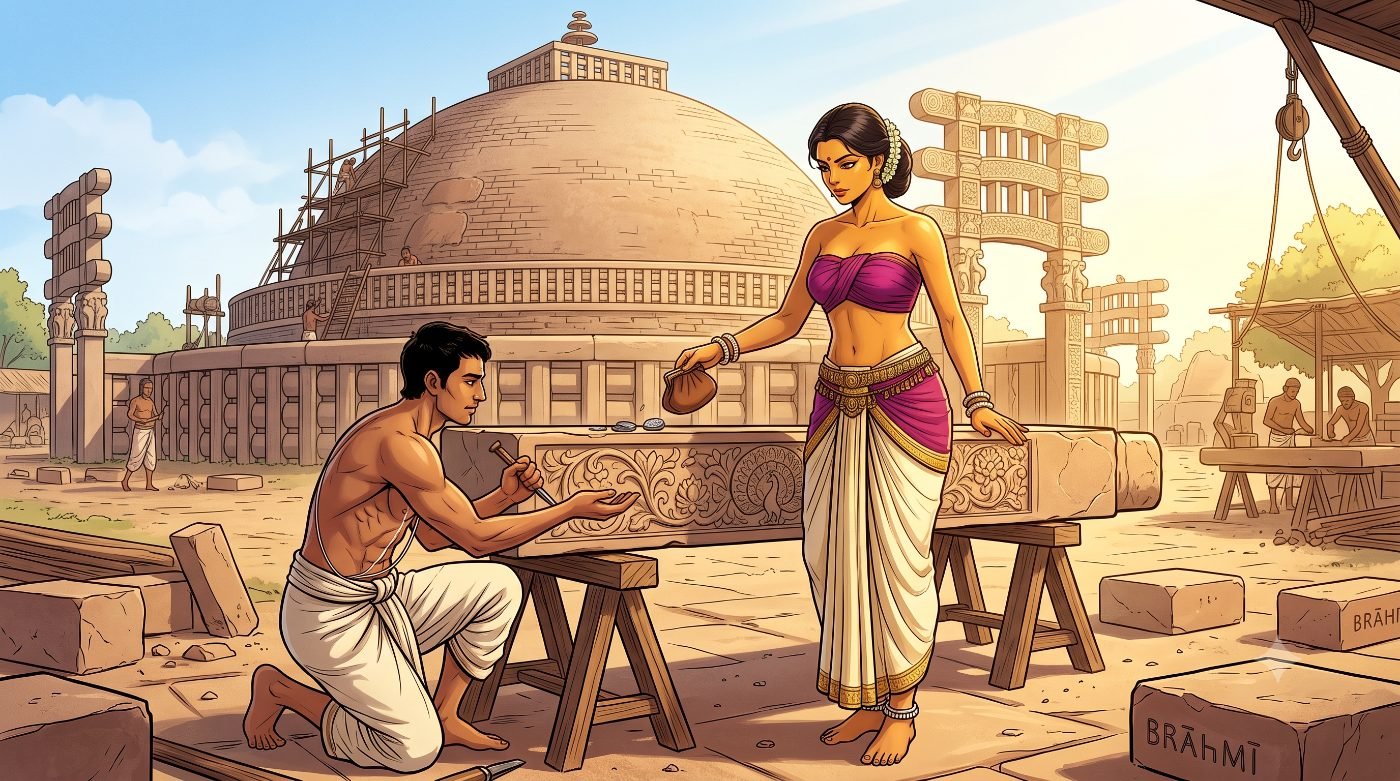
Mauryan queens are attested by name in the tradition, though the surviving record of their individual lives is thin. Separately, the practice of individual donation to Buddhist monuments — commissioning stonework, paying craftsmen directly — has its origin in this period. The Great Stupa at Sanchi was first commissioned under Ashoka; the surviving carved stone gateways and railings that visitors see today belong to a later, Shunga-period expansion, but the practice of lay and royal patronage funding such monuments begins with the Mauryan court.

How to read the pictures
These are drawings, not evidence. Every caption is split three ways. Attested means the object, garment, or practice is documented — in a treatise, an inscription, or an excavated find. Inferred means we filled it in: faces, individual likeness, the arrangement of a scene. Depicted for legibility means we knowingly drew something in a clearer or later form than the evidence supports, and say so.
A few choices recur across all of these images and are declared once rather than in every caption: the forehead mark, the red hand and foot markings, and the build given to every figure are the illustration's own visual style, not features drawn from a source.
A state-regulated profession is not evidence of general social standing, and an armed bodyguard is a narrow, specific role, not a claim about women's position in Mauryan society broadly. The Arthashastra is a normative text — it describes how Kautilya thought the state should organise these roles, which is not always identical to how they worked in practice.
What it does establish is that the Mauryan state recognised, salaried, and regulated women's labour and women's presence in security roles as ordinary administrative categories, worth writing rules for.
Sources
The state treatise, the outside account, and the monument.